Behind every successful theatrical performance, it’s not just actors and lights at work, but also a complex set design apparatus that helps create atmosphere and tell the story. Among the most important elements of any staging are the stage wings, essential components for building the stage space and ensuring the proper functioning of a show.
But what exactly are stage wings? Where does their name come from, and what is their function?
What are stage wings
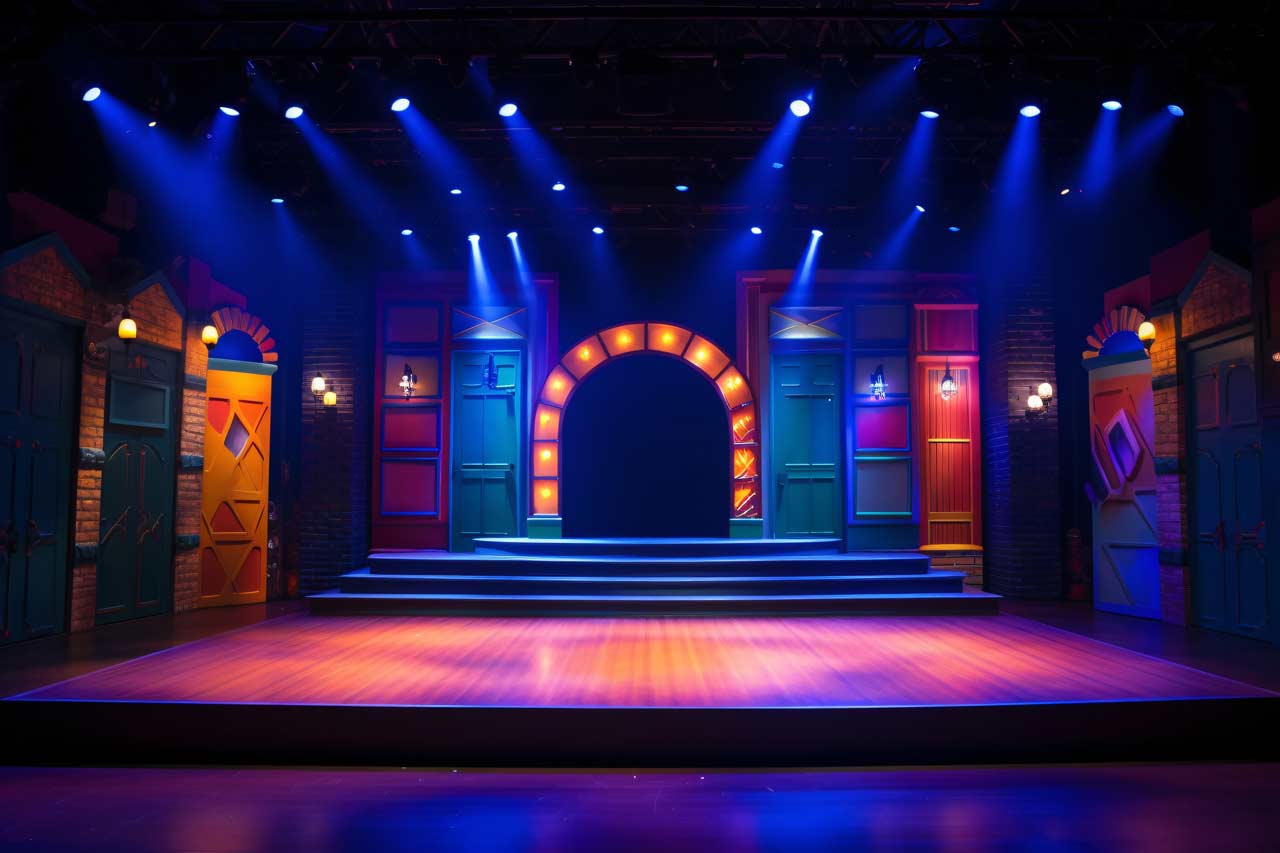
In theatrical language, wings are vertical elements of the set design that mark the stage space at the sides of the stage. They serve a dual purpose: on one hand, they hide the side areas of the stage from the audience (where technicians, actors, and stagehands move), and on the other, they help create depth and perspective within the scene.
In practice, wings allow the audience to see only what the director wants to be seen. At the same time, they become fundamental elements for defining the setting: a room, a street, a forest, or a park.
Wings can be fixed or mobile, painted or plain, and are often mounted on wooden or metal frames covered with canvas or lightweight materials. In more modern productions, fireproof fabrics, modular panels, or easily transportable folding systems are also used.
What are stage wings for
Wings serve not only an aesthetic purpose, but are also practical and narrative tools.
1. Defining the stage space
They limit the audience’s view, guiding it within an imaginary space that fits the story being performed.
2. Hiding technical movements
They allow actors to enter and exit the stage unnoticed, hide equipment, set changes, or special effects.
3. Creating depth effects
When placed at regular intervals from each other, wings help create a perspective effect that amplifies the sensation of space.
4. Encouraging scenic modularity
Wings can be switched out, replaced, or adapted according to the type of show, making the set design flexible and reusable.
Wings in amateur and professional theater companies
For major theater companies with dedicated workshops and storage spaces, storing wings and set materials is a well-established process. But for amateur, school, or independent companies, the situation changes completely: the lack of adequate space often forces them to improvise temporary solutions.
Many companies use gyms, basements, community facilities or shared spaces to store their wings, risking damage due to humidity, dust, or accidental knocks. Being bulky and fragile, wings require dry, clean, and safe environments.
Moreover, amateur productions often alternate several shows throughout the year, accumulating sets, panels, and materials that cannot be disassembled and reassembled every time without a suitable place for storage.
Not to mention all the props, costumes, lights, and audio equipment.
Why self storage is the ideal solution for stage wings
Casaforte self storage is the perfect solution for this type of need. These are private storage units, in various sizes, that can be rented for short or long periods depending on the needs of the company.
Main advantages of self storage for theater companies:
- Custom-sized space: Casaforte units are available in different sizes, perfect for storing wings, scenic panels, backdrops, and costumes.
- Flexible contracts: you can rent a Hotel of Things just for the required period — for example, between one theater season and another — paying only for the time actually used.
- 24/7 security: alhttps://casaforte.ch/l units are protected by video surveillance systems and controlled access, ensuring the safety of sets and all stage materials.
- Convenient access: storage locations are easily accessible, so you can retrieve or deposit stage materials whenever needed, even at the last minute.
How to store and organize stage wings in a self storage unit
Once you’ve chosen your space in a Casaforte unit, it’s important to organize it efficiently to optimize the space and ensure proper preservation, paying only for the space you genuinely need.
1. Dismantling and protection
Before storing the wings, make sure they are clean and completely dry. If they are made of fabric, avoid folding them too tightly: roll them around tubes or cardboard cores to avoid permanent creases. Rigid structures made of wood or metal should be dismantled and wrapped in protective sheets or bubble wrap.
2. Clear labeling
Each element should be labeled with the name of the show or type of scene (e.g. “Scene 1 – Interior House,” “Forest Backdrop”). In this way, retrieval will be quick and intuitive.
3. Use of vertical space
Take advantage of the unit’s height by installing modular shelving. Less-used items can be placed higher up, while heavier wings and panels should go at the bottom.
4. Themed areas
Divide the unit into areas: sets, costumes, technical equipment, and stage materials. Creating dedicated zones avoids confusion and makes future setups much easier.
5. Periodic checks
Check the condition of the material at least once every theater season. If you notice signs of wear or humidity, take immediate action. The dry environment of Casaforte self storage helps prevent the majority of problems, but maintenance remains essential to guarantee long-term durability.
How a theater company in basel solved its problems:
An amateur theatre company in Basel had long struggled with a problem common to many similar groups: managing scenery and stage wings between one performance and the next.
The materials were scattered across the garages of various group members, and every time an actor decided to leave the company, the same problem arose: recovering the pieces stored in their garage, transporting them elsewhere, and reorganizing everything from scratch.
This resulted not only in wasted time and logistical difficulties, but also the risk of damaging or losing important parts of the sets.
One day, Noah, one of the actors, walked past a Casaforte centre in Hardstrasse, Basel, and, intrigued by the sign advertising the Hotel of Things, decided to go in and ask for more information.
After discovering the possibility of renting a private, secure and flexible unit, he shared the idea with the rest of the theatre company. Together, they decided to move all their scenery there: stage wings, backdrops, furnishings and technical materials. From that moment on, all the materials have been stored in one safe, dry, and easily accessible place, and every member can access them whenever needed without any complications. This way they have eliminated chaos, improved organisation and, above all, preserved the value of their stage design work.
The Hotel of Things: the perfect solution to store all your stage materials
Stage wings are the visual heart of a show, but also one of the most difficult elements to look after. Their bulkiness, the delicacy of the materials and the need for dry, secure spaces make storage a real challenge, especially for small theatre companies.
Casaforte self storage offers a simple and accessible solution: tailor-made, secure, dry and easily reachable private units, ideal for storing wings, costumes, backdrops and technical equipment.
With this solution, every company can free up space on their premises, streamline logistics and ensure their scenery lasts a long time.
An intelligent way to protect creativity and keep bringing the magic of theatre to life, show after show.